Through the windows of your soul
The world is looking in to know
If love is is your eyes
Because love can't hide!
Through the weary world of lies
The world is looking in your eyes
If love can't be denied
Oh love, don't hide!
Doesn't matter what you do,
Your windows will expose you.
Love shines through the pure, love can cure!
Hearts to love and lights to feed,
The world is crying out in need,
For love to be in your eyes; with love, I cry, stay true.
People think I listen to weird music, but that really depends on what their definitions of "weird" are.
It is true that the word love is mentioned a bit much in Annie Herring's song "Stay True," (while I am actually listening to the amazing Rimsy-Korsakov's exciting "Festival at Bagdad") but the song's message is much more than a rant about staying true to love.
The eyes of a person never look or grow old. Granted, they may wear out or become blind, but eyes hold something important: Windows into souls. Eyes are the small physical element God gave us that does not, in a sense, age with a person. Of course eyes decompose when a person leaves this earth, but this vital pair of organs remains expressive, twinkling, sharp, soft, mesmerizing.
God's love for others should show through our actions as well as our eyes, for we are called to feed His sheep and tend His flock. No wonder eye contact is so important.
If you truly love Christ, that "stay true" love will not be able to hide: Your windows will expose you, your soul. The world is starved for God's love; let it be communicated through your eyes.
Sunday, 11 November 2012

Monday, 5 November 2012
Running on Three Cylinders

Well, thank you so much, Mr. Wilde, but what defines something well writ?
Someone gushed to me once that the Hunger Games were "so good!!" Sorry, but was I the only one who was bothered by the awkward present, first person tense?
Is a book simply "good" when it is capable of holding and capturing attention long enough for someone to finish it? Today, attention spans are so short it is almost embarrassing to humanity. Exercising the brain makes one feel so invigorated, like reading philosophy and then practicing piano while thinking and criticizing Socrates because he was bullying Euthyphro. That's an extreme example, I will admit, but it works.
As for Wilde, he distorted something very important. Everyone has a worldview, and it usually seeps into an author's, artists, or creators work. Wilde could just say that an immoral book could be written well, or a good book could be written badly (but then it would not really be a good book).
That is sometimes is true, but to state an absolute that is debatable is so very egotistical it suppresses even the natural inclination to discuss: The 'that is all' ending to Wilde's phrase simply crushes any want to dissect the phrase.
Wilde states it does not matter if a book is moral or immoral, it only matters if it was written well or poorly. That's like saying something (or worse, someone) immoral could be good if crafted well, like Iras in Ben-Hur. True, she was captivating, maybe too much so, but she was not consistent on the inside.
In doing school and reading assignments with a glazed, sleep deprived look, it's good to catch these things, especially if you're only "running on three cylinders."
Sources:
Greenblatt, Stephen. The Norton Anthology of English Literature. New York: Norton, 2012. Print.
"Running on three cylinders" is in reference to James Herriot's book, All Creatures Great and Small.
Wednesday, 31 October 2012
The Monstrous Door: An Irreversible Hurt
A tall, amorous couple walked hand
in hand, quite unaware of their surroundings. They were leaving
church, and it is a wonder they did not fall over, for they were not
looking where they were going, but into the others' eyes. Slowly, so
slowly, did the tall two walk until they reached the door by the
nurseries. Little children with happy voices greeted parents, but
the tall two were unconscious. He pushed the exit door open for his
young wife, but, as both were infatuated, they failed to notice a
young and very small girl underfoot. He crossed the threshold, let
go, and the monstrous door fell, violently knocking her to the
ground.
Do not be
oblivious, rather “exhort one another daily, while it is called
today; lest any of you be hardened by the deceitfulness of sin.”
When we are oblivious, it is all to easy to cause another an irreversible hurt with the assistance of a monstrous door. Instead of non cogitans, or not thinking, take advantage of today and be considerate to those who have been knocked down.
Sourecs:
Even though it may
not specifically be letting a door crash on a little girl, this
scenario happens constantly.
The couple,
evidently married as well as oblivious to their environment, made one
mistake. This one mistake occurs every day, and, within certain
friendships, it causes rifts and irreversible hurts. With
different people and their respective circles of friends, some forget
about the small ones, or the people who seem to be ever in the
background. These people are forgot, and others do not realize how
much of an impact small, seemingly trivial, deeds have upon these
others.
Christ
should be the center of every relationship, and it is curious that
this couple was leaving church.
One would think they would employ care while exiting near all the
nurseries, but no, they stormed out after taking their time. A godly
relationship is in no way bad in itself, but when two are so centered
on one another that relatives, close friends, and even a little
girl are knocked down physically, mentally, or emotionally, it is
time to take a step back and realize where Christ is missing.
In the church,
couples are charged and supposed to live as good examples for the
body of the church in multiple ways for the young and old. It is
true that many are, but this couple was looked at as immature and
completely inconsiderate. When the watery-blue eyes of the young girl
looked up at her mother, they were shocked (both the eyes of the girl
and the mother). One should never be eager to display or showcase immaturity, and couples in the church should never mindlessly shock, much less hurt, young
children. Period.
If the people in
this incident were to meet on friendly terms sometime in the near
future, the girl would probably think about this incident, and
forever associate them with her being knocked down. This is a
possibility (though not the only one). In essence, what happened was
irreversible. The young man can never go through that situation in
time again, and his wife will never be able to relive that brief
scene. He was not being the man that he could be, and she was not
being the woman of grace she is called to be.
Heavy doors slam and crush: It is simply logical. When people are unconscious as to how
what they do impacts others, it shows third parties how immature they
(those unconscious and unaware peoples) really are. The tall two
probably would not have knocked her down on purpose, but are others
simply supposed to forgive them, for they know not what they do?
Inconsiderate
people are found everywhere, but inconsiderate Christians? Of course
we have all sinned and fallen short of God's glory. Though not as
cankerous a problem now, I was often guilty of leaving siblings or
friends out at times. However, as Christians we need to let Christ
help us rise above this baseness, this other nature, because without
Him, we will be as Edward Hyde and never stop knocking down little
girls.
Sourecs:
The Holy Bible. (Hebrews 3:13)
Monday, 22 October 2012
Letters and a Dart-Extinguishing Shield
As a writer, my favorite passages of scripture tend to be
Paul's letters, as they are so very matter of fact, alive, and weighty. I adore “weighty” passages; those that must
be mulled over and slowly digested are some most excellent challenges, which I
may write of another time. Lately, I've
been finding it hard to persevere in many parts of life. However; this is not about me, it's about
letters and perseverance to convictions.

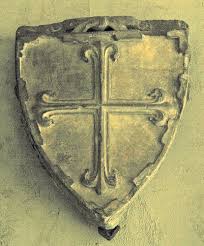
Stand up while readying, lest you lose this alertness in prayer.
Sources:
The Holy Bible. English Standard Version. Wheaton, IL: Crossway Bibles, 2007. Print.
I find it humorous how tales of old, such as Sir Walter
Scott's Ivanhoe or even Marmion romanticize those shiny fighters; those ruthless knights. How ridiculous. Others turn and dress up the Romans from days
when the Empire was at its zenith. So
why do I embrace Paul's analogy to armor in Ephesians and almost skeptically
scoff at the strong knight?
First, knights were only strong because of their will, their
insistence, and their power. Christians,
however, are to be strong in the Lord and in His mighty power (vs. 10). True, we could perhaps craft ourselves
brittle coverings like crabs or lobsters, but they serve only to protect our
sinful skin, whilst God's armor not only protects us but advances His name
while showing others His glory.
Every single time I read
this passage, I am enamored by the word whole
in verse 11. Paul says to put on the entire armor. He never said "You'll be fine; all
you'll need is your sword." No, we
need it all. This is, in fact, quite
humbling. Verse 14 states to
"stand", which only makes sense, a hoplite, knight, or soldier cannot put their gear on while sitting (save for shoes; but otherwise it is unheard of). We need
salvation, but even after being saved, we need God's righteousness, peace, and
truth. It is an interrelated web of blessings quite interdependent on one
another.
I may scoff at knights because none of them ever impress me: Ever. Yesterday or today. Realistically of figuratively. It is too bad for them;
although they could probably have cared less. (They probably are not impressed by me...) Regardless, none of the Romans impressed me (the bigots) but the soldiers of faith
do. Soldiers of faith accepted the
entire armor, and, unlike the knights and Romans, who took great delight in
causing more than enough trouble, they faithfully wore the shoes of readiness
of peace. (This is quite convicting; how
often do I run to make a situation peaceful?)
The part I thought the best was the amazing shield of
faith. No knight had ever thought of
this kind of protection. This shield is
actually what helps one endure hardship.
Think of the most high-tech weapon in the world. This defies them all!
Nothing can penetrate it: All opposition does not bounce off it, but is rather
absorbed by it. The shield of faith does
not only ward off the evil, it extinguishes all the flaming darts of the evil one. Not just a certain evil thought or specific action;
but all those darts. No weapon could be
more useful.
The verse I had in mind while writing is verse 18, where
perseverance is mentioned. Lately, I am
barely holding onto my sanity. I may be
exaggerating: I probably am, but life is hard, and though I hate to admit it, I am, sometimes,
tired of giving my all, which is when I slip. I have convictions that, because I am so very stubborn about them, will
not dissipate. The bad part is that I feel stupid for them when they are sound judgments God
has given me. He cares, and I know I am
supposed to follow what he’s laid out. Perseverance,
however, is not mentioned without prayer.
In all things it is imperative that we remain alert in prayer and
supplication. I was fighting being upset at students the other day; people do not think, and sometimes it frustrates me. No one ever really knows, but it's true. I am not going to become
a knight or soldier that feasts day in and day out, losing track of time and
slowly drifting into unconsciousness, which is exactly why I continue serving, questing, helping, writing, reading, standing.
Fellow Christian, as Relient
K so glibly puts it, it’s completely up to us to maintain consciousness;
which is exactly why standing while putting on the whole armor of God is just as
important as alertness in prayer and supplication. You can't sit down and apply this weight.
Stand up while readying, lest you lose this alertness in prayer.
Sources:
The Holy Bible. English Standard Version. Wheaton, IL: Crossway Bibles, 2007. Print.
Saturday, 13 October 2012
A Graced Presence
On September 17,
2012, the Minnesota Orchestra graced the Lake Harriet band shell for
the first time since 2007. Their purpose? To thank the people of
Minneapolis for supporting the arts (before going on strike, that is). In the end, hundreds of bikers,
young families, couples young and old, as well as those strolling
around Lake Harriet stopped their adventures to listen to music on a
beautiful evening. The pieces played had great variety, and aside
from the classic opening of Beethoven's 5th
Symphony, the program included
Fanfare, Solitude, Finlandia, Dance of the Tumblers,
Russian Sailors, Carnival Overture, and
even the Star Wars theme.
What's not to enjoy?
 When we arrived,
Beethoven's famous Fifth Symphony was filling the summer air. This
piece opened the hour long concert majestically, and the audience
responded very positively to the familiarity. Born in 1770,
Beethoven is one of the most celebrated composers of the Baroque era,
and he is also considered a composer who “foreshadowed” the
coming of the Romantic era (Wright, 210). Each and every violinist
was completely drawn into what he or she was playing, and, as a core
of dancers communicate with the lead, they followed the conductor to
make the most they could out of the notated dynamics. Beethoven's
5th is unique because of the minor and major
themes work together and later become resolved. It makes for a
wonderful, exciting listening adventure that provokes interesting
responses and thoughts.
Fanfare for Prairie Skies, composed by Stephen Heitzeg, a local from St. Paul, reminded me of Aaron Copland's Rodeo and
Appalachian Spring.
The trumpets, french horns, and punctuating percussion added to the
feel of being out under the skies and the sun, out in the open, on a
beautiful day. It was an interesting piece; as a fanfare, it is not
extensive, but short. If it were longer, many listeners would have
grown tired of the blaring and the pounding. However, because it
varied, had a rondo theme, and was short and sweet, it was sincerely
accepted.
Solitude
on the Mountain which followed,
was composed by Ole Bull, a Norwegian violinist, during the late
Classical to early Romantic eras. The piece employs the use of the
double bass, cello, viola, and violins exclusively. The piece is
soothing, relaxing, and it was interesting to watch how it affected
the audience; wild children stopped rampaging, the elderly couple
next to me reached out and held hands, the blue, four month old
pit-bull puppy stopped carousing with her playmate. It is a very
peaceful composition, and when it ended, the humming of the violins
faded out. The audience seemed to hold their breath as the end came
slowly, and it made one feel content.
Next
was Sibelius' Finlandia, one
of my favorite Sibelius pieces. The Finlandia Hymn is
literally a musical outline of Finland's history. The beginning with
the ominous brass and bass symbolizes the overbearing of Russia, but
then the melody turns to a passionate theme that stands for freedom
(Siren). Three quarters into the piece, flutes dominate the melody
change to what is recognized as the hymn “Be
Still My Soul” the violins are added subtly while the swells,
cymbals, trumpets, and violins added character to a piece with a
taste of folk themes. This piece impressed everyone, as it had a
triumphant, majestic conclusion.
 Rapid
violins followed by the brass announced something exciting, perhaps
Spring? Or maybe a dance in the Spring? Dance of the Tumblers
composed by Rimsy Korsakov. My favorite musicians to watch in
this piece were the violins, but also the cellos. They are so full
of strength as well as a certain passionate sense. The oboe had a solo
with an air of mystery before the violins and brass began the ending.
It is certainly an exciting piece, and being a dancer myself, I felt
the urge to do a Mazurka. I noticed many young children actually ran
and danced around, choreographing their own patterns and making
circles around the picnic blankets. Korsakov made this piece full of
energy and excitement, and no less.
A
minor piece full of tumultuous themes, its duple timing also drives
one to dance. It brought memoties of Tchaikovsky's “Chardaz” dance
from Swan Lake. I was able to appreciate the way Brimer added
such character to the music in Russian Sailor's Dance; I
imagined quite a few different sailors, each with varied build and
attributes to their name. However; in this piece, they were all
drunk, and they were also all dancing around in a carousing manner. I found it interesting
how each musician was able to display different emotions during the
variant pieces, as music has such an effect on our moods. This was a
fast paced, intense expression with a flair of Russia. Do not run
into one of their sailors: Cymbals will crash, and violins will wail in tune with the wind on the high seas. In essence, this wonderful piece is quite exciting.
The
second to last piece, composed by Antonin Dvorak, was the Carnival
Overture. This overture started suddenly and moved quickly. The
beginning does not waste time in employing almost every instrument in
the orchestra, and throughout Carnival Overture, a few
instruments are able to have brief chorus solos (that is, of their
instrument as a group) of the theme including the flutes, an oboe,
the two cellos. The texture thickened as each instrument piled on
the top of another, but before it became overwhelming, everything was
swept together again. People were so glad to be outside listening,
so close to the orchestra; the swift changes from quiet major themes
to the boisterous minor themes did not startle anyone, but rather
made the audience listen for more. It was distracting, although disturbingly appropriate to the piece's name (Carnival Overture) when a man protested animal cruelty by walking around in a bright yellow chicken suit. Nevertheless, when the trumpets sounded their
arpeggio signaling that the end was about to begin, everyone listened
with rapt attention while the entire orchestra blared “The End!”
triumphantly.
The
last piece, I assume, was tacked on simply to close the evening in a
fun way. The Star Wars theme written for the films (by the
same name) by John Williams. It starts with a thrilling fanfare that
lasts for the first twenty-five seconds, and then fades into the
violins, who carry the theme. When the fanfare returns, more
percussion is added until it slows and grows quieter with a short
minor flute solo. Of course, it gives the theme for each character,
the good, the bad, and the ugly, but watching it performed live was
rather interesting. Though not a fan of Star Wars, I noticed I
actually liked the piece and could respect it, if only for the fact
that it is a forever famous composition that symbolizes each
character and science fiction.
Lake
Harriet and the Minnesota Orchestra should spend more time with one
another, as it is not simply the bikers who enjoyed the music.
People of all ages were present; because music is a great invention.
The variety of the concert and the selection of the pieces played was
excellent. The Minnesota Orchestra began with triumph and finished
with the same. However, something had happened that had not in five
years: People were able to be outside, listen to classical music, and
truly appreciate it.

Sources:
Siren,
Vesa. "Finlandia." Sibelius.
Sibelius Family, 2000. Web. 20 Sept. 2012.
Wright,
Craig M. Listening
to Music.
Australia: Wadsworth/Thomson Learning, 2011. Print.Photo Credits
Tuesday, 9 October 2012
cogitens in motus pictura I
Over-Dramatized? Use Imagination Instead!
Peter and the Wolf: A story of a boy with an interesting sense of adventure and courage. When Prokofiev composed this piece in Russia in 1936, the country was still known as the USSR. Despite the label of the country, Prokofiev was able to compose music for the express purpose of telling a story.
In 1995, Affirm
Films decided to produce a short motion picture with animation to go
along with Prokofiev's Peter and the Wolf,
with the music performed by the RCA Victor Symphony Orchestra
(conducted by James Daugherty). The film differs minutely from the
actual story, although the main point of the film was to put
animation of a story with Prokofiev's music.
The
story takes place in Russia, where a young boy named Peter plays out
in the meadow on a beautiful spring morning. He is joined by a duck,
a bird, and his cat, but the fun is stopped all too soon, as his
grandfather comes out and scolds him; for if a wolf should come out
of the forest, Peter would be in great danger. Peter follows him
back to the house, but sneaks out later when the Grandfather falls
asleep again. Then what should appear out of the forest except the
big, gray, wolf? After seeing the wolf terrorize the cat, snap at
the bird, and swallow the duck whole, Peter asks the bird to distract
the wolf, who, after being teased, becomes quite tired and falls
asleep. Peter then takes a rope and slips it around the wolf's tail,
in order to capture him. The wolf wakes up, and after a struggle,
hunters come out of the forest. Grandfather comes out, scolds Peter,
but realizes his grandson is a brave boy. Every character begins a
procession, and the wolf is taken to the Zoo. The beginning of the film is best, because it was simply the scenes of nature; the mountains, springs, meadows, hills, and flowers in the breeze. Peter's theme, which employs the strings of the orchestra, was used in a variation that introduced the beauty and beckoning of Spring and the meadow. The acting, however, as it was slightly over-dramatic. It was indeed a small production, as the three actors also supplied all the voicing for the film, which also added an interesting collective flow. However, it differed in some details. In the original story by Prokofiev, the bird is a male, and the duck is a female who does not survive being swallowed by the monstrous wolf. In the film, the bird is a female with a nest of young ones, and the duck is an odd male who escapes from the wolf's stomach, dancing ridiculously while making ballet look hideous. Apart from these differences, the animation was rough for 1995, (after comparing it to Pixar's Toy Story 1 or even Aladdin, which was released in 1992) perhaps because Affirm Films did not have commendable staff such as Steve Jobs or Disney behind the animation.
Although the film should not be placed in a person's category of favorites, attentions should be paid to this piece. The music impacted the film in many ways: First and foremost, each character had a theme from the orchestra. Peter is represented by all the strings in a carefree, joyful, major theme; the flute is for the bird, who flits and flies across the meadow, around the pond, and up into the tree; the duck is easily recognized by the oboe; the cat by the clarinet; and the seemingly grumpy grandfather by the bassoon. The terrible wolf's character is enhanced by three french horns, while the hunters are represented by the kettle and bass drums. In essence, because the story was written and the music performed to fit the plot, each theme flows with the main story, creating an interesting tale to introduce one to the orchestra, and no character was the worse off for having a theme for their personality. Even though the film watered down the death of the duck, changed the bird from a male to a female, and over-dramatized some of the actors and actresses lines, the music rings true, it can defend itself. Peter and the Wolf really does not need visuals to perform the story. All that is necessary is an appropriate voice for a narrator, and the themes and music of Peter and the Wolf can play on the greatest stage of all: Your own imagination.
A film review written a bit ago. I do, however, digress from this to simply say there is one version that seems it could enhance the musical story. I dare to dream.
The 2006 British/Polish/Norwegian co-produced film
Subscribe to:
Posts (Atom)