Wednesday, 21 November 2012

The Word So Freely Given: Count It

After attending the needy element assigned the name of school, I am finally out of the tunnel and running the home stretch. Running is quite exhilarating.

Although I do not get a break, did not fly out of state immediately after my British Literature class, and must continue through the week as if there was nothing to celebrate, I realized that even the thought of a holiday spent with family for Thanksgiving made me feel at ease.

Perhaps it's because my analysis is finished, or perhaps it is because I actually did well on a music history test. Who knows.  In short, I welcome the thought of Thanksgiving. How often is it that we actually count our blessings and name them one by one?  Some of the basic elements to be thankful for are parents, siblings (yes, even if they drive you crazy at times) the life lessons God is always teaching, and the word he so freely has given us.

Just think:  If a friend wrote a book or letter to you as large or lengthy as the Bible, that would show some serious dedication.  I have written letters, but none that match that length.  God is all about dedication, and we can show him our dedication to him by thanking him for all the blessings he has given us, especially His word.

Count your blessings. If you can't name them one by one, make an effort to do so, for it is all too often those blessings will be far too numerous for any numerical system.

Happy Thanksgiving!
(Literary analysis will be posted within the next week.) 


Monday, 12 November 2012

Snowflakes and Study Breaks

To commemorate the first official snow fall (for snow that falls and melts once it lands the upon the ground should never count; it was faint-hearted) the swing was given honors.

As the snow blustered about the trees and fell on my hair, it stood out on my red wool jacket, and I was reminded of how individual the snowflakes are. No two are alike, yet thousands fall; they fall alone or land in clumps to congregate where the wind chooses.  Appreciating God's creation for just moment is an excellent way to break a study rampage, for sometimes, sitting too long with one thing can be counter productive.

Up! up! my Friend, and quit your books;
Or surely you'll grow double:
Up! up! my Friend, and clear your looks;
Why all this toil and trouble?

The beginning of this poem (The Tables Turned) by William Wordsworth is carefree and appealing, but the rest of it states that one should not have to learn from books simply because Nature (...with a capital N, mind you) has all the answers.  Nature does not have all the answers to life, and it is not going to ever answer the question of why students must learn Math, as it is a created entity.  God is in control of created entities, and he did not create nature as a teacher.  It is a part of his creativity and glory, which is seen even in the tiniest, most delicate of snowflakes observed on a study break.

Sources:
The Tables Turned

Sunday, 11 November 2012

Windows that Expose the Soul

Through the windows of your soul
The world is looking in to know
If love is is your eyes
Because love can't hide!

Through the weary world of lies
The world is looking in your eyes
If love can't be denied
Oh love, don't hide! 

Doesn't matter what you do, 
Your windows will expose you.
Love shines through the pure, love can cure!
Hearts to love and lights to feed,
The world is crying out in need,
For love to be in your eyes; with love, I cry, stay true.

People think I listen to weird music, but that really depends on what their definitions of "weird" are.
 
It is true that the word love is mentioned a bit much in Annie Herring's song "Stay True," (while I am actually listening to the amazing Rimsy-Korsakov's exciting "Festival at Bagdad") but the song's message is much more than a rant about staying true to love.

The eyes of a person never look or grow old. Granted, they may wear out or become blind, but eyes hold something important: Windows into souls. Eyes are the small physical element God gave us that does not, in a sense, age with a person.  Of course eyes decompose when a person leaves this earth, but this vital pair of organs remains expressive, twinkling, sharp, soft, mesmerizing.

God's love for others should show through our actions as well as our eyes, for we are called to feed His sheep and tend His flock.  No wonder eye contact is so important.

If you truly love Christ, that "stay true" love will not be able to hide: Your windows will expose you, your soul.  The world is starved for God's love; let it be communicated through your eyes.

Monday, 5 November 2012

Running on Three Cylinders

"There is no such thing as a moral or immoral book. Books are well written, or badly written. That is all."

Well, thank you so much, Mr. Wilde, but what defines something well writ?

Someone gushed to me once that the Hunger Games were "so good!!"  Sorry, but was I the only one who was bothered by the awkward present, first person tense?

Is a book simply "good" when it is capable of holding and capturing attention long enough for someone to finish it? Today, attention spans are so short it is almost embarrassing to humanity.  Exercising the brain makes one feel so invigorated, like reading philosophy and then practicing piano while thinking and criticizing Socrates because he was bullying Euthyphro. That's an extreme example, I will admit, but it works.

As for Wilde, he distorted something very important. Everyone has a worldview, and it usually seeps into an author's, artists, or creators work.  Wilde could just say that an immoral book could be written well, or a good book could be written badly (but then it would not really be a good book).

That is sometimes is true, but to state an absolute that is debatable is so very egotistical it suppresses even the natural inclination to discuss: The 'that is all' ending to Wilde's phrase simply crushes any want to dissect the phrase.

Wilde states it does not matter if a book is moral or immoral, it only matters if it was written well or poorly. That's like saying something (or worse, someone) immoral could be good if crafted well, like Iras in Ben-Hur. True, she was captivating, maybe too much so, but she was not consistent on the inside.

In doing school and reading assignments with a glazed, sleep deprived look, it's good to catch these things, especially if you're only "running on three cylinders."

Sources:
Greenblatt, Stephen. The Norton Anthology of English Literature. New York: Norton, 2012. Print.
"Running on three cylinders" is in reference to James Herriot's book, All Creatures Great and Small. 

Wednesday, 31 October 2012

The Monstrous Door: An Irreversible Hurt

A tall, amorous couple walked hand in hand, quite unaware of their surroundings. They were leaving church, and it is a wonder they did not fall over, for they were not looking where they were going, but into the others' eyes. Slowly, so slowly, did the tall two walk until they reached the door by the nurseries. Little children with happy voices greeted parents, but the tall two were unconscious. He pushed the exit door open for his young wife, but, as both were infatuated, they failed to notice a young and very small girl underfoot. He crossed the threshold, let go, and the monstrous door fell, violently knocking her to the ground.

Even though it may not specifically be letting a door crash on a little girl, this scenario happens constantly.

The couple, evidently married as well as oblivious to their environment, made one mistake. This one mistake occurs every day, and, within certain friendships, it causes rifts and irreversible hurts. With different people and their respective circles of friends, some forget about the small ones, or the people who seem to be ever in the background. These people are forgot, and others do not realize how much of an impact small, seemingly trivial, deeds have upon these others.

Christ should be the center of every relationship, and it is curious that this couple was leaving church. One would think they would employ care while exiting near all the nurseries, but no, they stormed out after taking their time. A godly relationship is in no way bad in itself, but when two are so centered on one another that relatives, close friends, and even a little girl are knocked down physically, mentally, or emotionally, it is time to take a step back and realize where Christ is missing.

In the church, couples are charged and supposed to live as good examples for the body of the church in multiple ways for the young and old. It is true that many are, but this couple was looked at as immature and completely inconsiderate. When the watery-blue eyes of the young girl looked up at her mother, they were shocked (both the eyes of the girl and the mother).  One should never be eager to display or showcase immaturity, and couples in the church should never mindlessly shock, much less hurt, young children. Period.

If the people in this incident were to meet on friendly terms sometime in the near future, the girl would probably think about this incident, and forever associate them with her being knocked down. This is a possibility (though not the only one). In essence, what happened was irreversible. The young man can never go through that situation in time again, and his wife will never be able to relive that brief scene. He was not being the man that he could be, and she was not being the woman of grace she is called to be.

Heavy doors slam and crush: It is simply logical. When people are unconscious as to how what they do impacts others, it shows third parties how immature they (those unconscious and unaware peoples) really are. The tall two probably would not have knocked her down on purpose, but are others simply supposed to forgive them, for they know not what they do?

Inconsiderate people are found everywhere, but inconsiderate Christians? Of course we have all sinned and fallen short of God's glory. Though not as cankerous a problem now, I was often guilty of leaving siblings or friends out at times. However, as Christians we need to let Christ help us rise above this baseness, this other nature, because without Him, we will be as Edward Hyde and never stop knocking down little girls.

Do not be oblivious, rather “exhort one another daily, while it is called today; lest any of you be hardened by the deceitfulness of sin.” When we are oblivious, it is all to easy to cause another an irreversible hurt with the assistance of a monstrous door. Instead of non cogitans, or not thinking, take advantage of today and be considerate to those who have been knocked down.


Sourecs:
The Holy Bible. (Hebrews 3:13)

Monday, 22 October 2012

Letters and a Dart-Extinguishing Shield

As a writer, my favorite passages of scripture tend to be Paul's letters, as they are so very matter of fact, alive, and weighty.  I adore “weighty” passages; those that must be mulled over and slowly digested are some most excellent challenges, which I may write of another time.  Lately, I've been finding it hard to persevere in many parts of life.  However; this is not about me, it's about letters and perseverance to convictions.

I find it humorous how tales of old, such as Sir Walter Scott's Ivanhoe or even Marmion romanticize those shiny fighters;  those ruthless knights.  How ridiculous.  Others turn and dress up the Romans from days when the Empire was at its zenith.  So why do I embrace Paul's analogy to armor in Ephesians and almost skeptically scoff at the strong knight?


First, knights were only strong because of their will, their insistence, and their power.  Christians, however, are to be strong in the Lord and in His mighty power (vs. 10).  True, we could perhaps craft ourselves brittle coverings like crabs or lobsters, but they serve only to protect our sinful skin, whilst God's armor not only protects us but advances His name while showing others His glory.

Every single time I read this passage, I am enamored by the word whole  in verse 11.  Paul says to put on the entire armor.  He never said "You'll be fine; all you'll need is your sword."  No, we need it all.  This is, in fact, quite humbling.  Verse 14 states to "stand", which only makes sense, a hoplite, knight, or soldier cannot put their gear on while sitting (save for shoes; but otherwise it is unheard of). We need salvation, but even after being saved, we need God's righteousness, peace, and truth.  It is an interrelated web of blessings quite interdependent on one another.

I may scoff at knights because none of them ever impress me: Ever. Yesterday or today. Realistically of figuratively.  It is too bad for them; although they could probably have cared less.  (They probably are not impressed by me...)  Regardless, none of the Romans impressed me (the bigots) but the soldiers of faith do.  Soldiers of faith accepted the entire armor, and, unlike the knights and Romans, who took great delight in causing more than enough trouble, they faithfully wore the shoes of readiness of peace.  (This is quite convicting; how often do I run to make a situation peaceful?) 
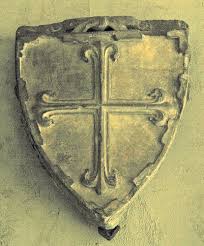
The part I thought the best was the amazing shield of faith.  No knight had ever thought of this kind of protection.  This shield is actually what helps one endure hardship.  Think of the most high-tech weapon in the world. This defies them all! Nothing can penetrate it: All opposition does not bounce off it, but is rather absorbed by it.  The shield of faith does not only ward off the evil, it extinguishes all the flaming darts of the evil one.  Not just a certain evil thought or specific action; but all those darts.  No weapon could be more useful.  

The verse I had in mind while writing is verse 18, where perseverance is mentioned.  Lately, I am barely holding onto my sanity. I may be exaggerating: I probably am, but life is hard, and though I hate to admit it, I am, sometimes, tired of giving my all, which is when I slip. I have convictions that, because I am so very stubborn about them, will not dissipate. The bad part is that I feel stupid for them when they are sound judgments God has given me. He cares, and I know I am supposed to follow what he’s laid out.  Perseverance, however, is not mentioned without prayer.  In all things it is imperative that we remain alert in prayer and supplication. I was fighting being upset at students the other day; people do not think, and sometimes it frustrates me. No one ever really knows, but it's true.  I am not going to become a knight or soldier that feasts day in and day out, losing track of time and slowly drifting into unconsciousness, which is exactly why I continue serving, questing, helping, writing, reading, standing.

Fellow Christian, as Relient K so glibly puts it, it’s completely up to us to maintain consciousness; which is exactly why standing while putting on the whole armor of God is just as important as alertness in prayer and supplication.  You can't sit down and apply this weight.

Stand up while readying, lest you lose this alertness in prayer.

Sources: 
The Holy Bible. English Standard Version. Wheaton, IL: Crossway Bibles, 2007. Print.